


What to Wear to a Lūʻau
Style Guide
What to Wear to a Lūʻau
What venues ask for, what works on grass and low seating, and how to dress the whole ʻohana in one print.
For many lūʻau, a comfortable outfit in an island print works well: a breathable dress for wāhine, an aloha shirt with shorts or slacks for kāne, and flat sandals or sturdy shoes that can handle grass. Your venue's own instructions come first, so check them before you dress.
A lūʻau can be a ticketed evening for visitors, a family celebrating a child's first year, or a gathering in someone's backyard, and there is no single dress code that covers them all. This guide keeps three things apart: what venues ask for, practical advice for heat, grass and seating, and a little of the history behind the word.

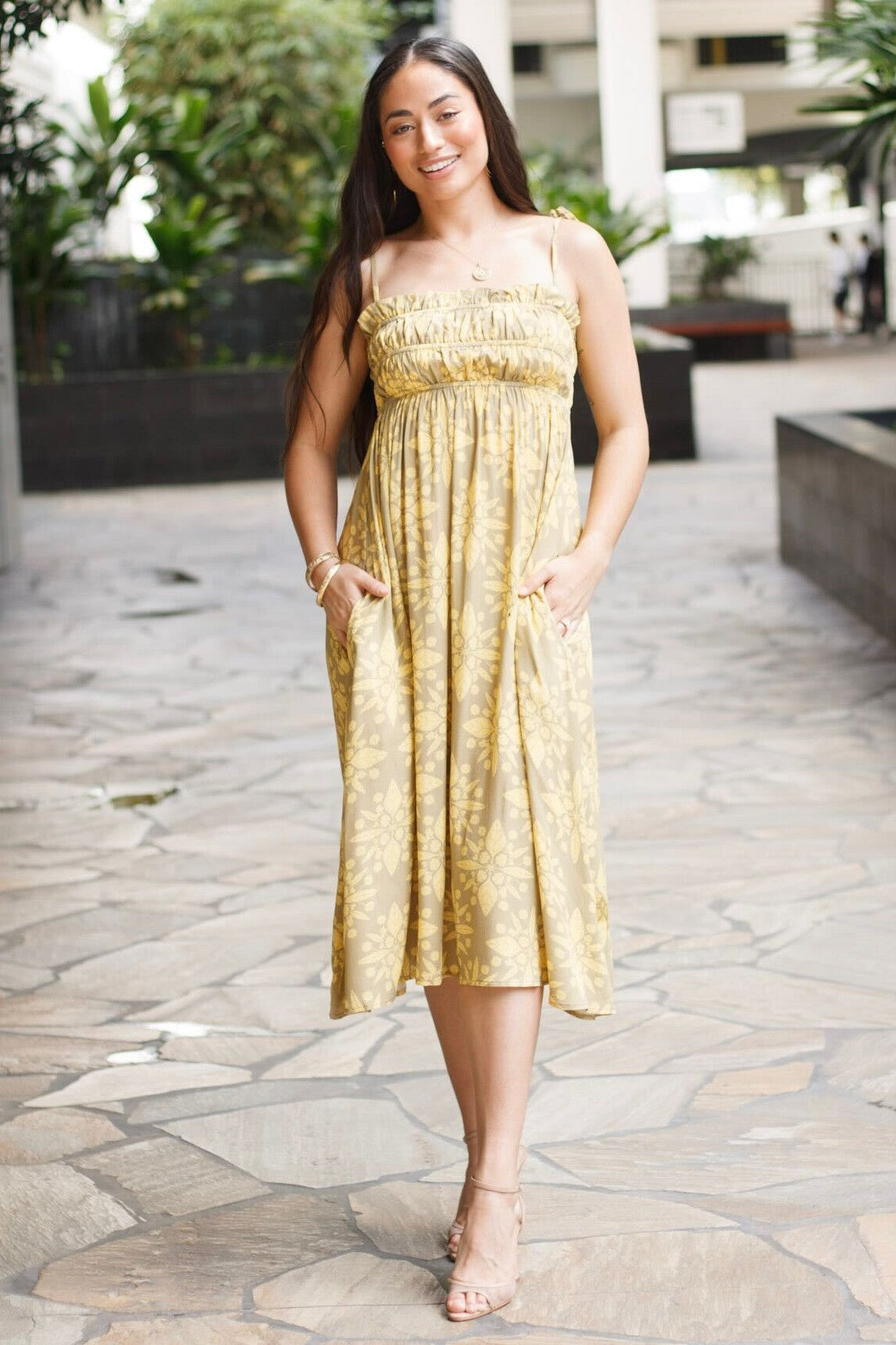
Long, flowing styles in our Peach Blush Pua Melia print.
Start with the kind of lūʻau
A lūʻau for visitors. For many visitors, a lūʻau is a ticketed dinner with music and hula. These events set their own guidance. The venues quoted below keep it relaxed, with a few firm rules. Read the venue's page or your booking confirmation before you pack.
A family lūʻau. In Hawaiʻi, many families mark a child's first birthday with a lūʻau. These are often large gatherings of ʻohana and friends. If you are invited, the hosts are the best guide. Ask them, and dress as you would for any family celebration you care about.
A lūʻau at home. A party with a lūʻau theme follows the host's lead. Aloha wear is a natural choice, but the host comes first.
What venues ask for
Venues publish their own guidance, and it differs from place to place. Two examples show the range.
At Old Lāhainā Lūʻau on Maui, the venue's FAQ says to wear whatever is most comfortable, and notes that most women wear sundresses and most men wear shorts and an aloha shirt. It asks guests to wear sturdy shoes and leave high heels behind, because heels sink into the grass. Guests choose either traditional mat seating, with floor cushions and no back support, or a table with chairs.
At the Polynesian Cultural Center on Oʻahu, the park rules require shoes and shirts at all times and do not allow bathing suits. The Center asks guests to dress appropriately for a family-oriented attraction.
The details differ, so check the page for the lūʻau you have booked. If the venue publishes nothing, a call to the venue settles it.
Party-planning advice is not a venue rule. The Polynesian Cultural Center also publishes a lūʻau party planning guide for people hosting or attending a lūʻau party. It says traditional clothing is welcome but not required, and suggests leaving dress shoes, sneakers and heels at home. That is general advice for a party, and it does not replace the entry rules of any venue, including the Center's own.
Practical advice

An aloha shirt with shorts, the familiar choice for kāne.
Choose cloth that breathes. Lūʻau are often outdoors and often warm. Light, breathable fabric keeps you comfortable through a long evening of food and music. Our guide to choosing fabrics for warm-weather clothing explains the choices.
Plan your footwear for the ground. Outdoor lūʻau are often held on grass. Flat sandals or sturdy flat shoes are easier than heels there. Some venues ask for sturdy shoes, and some require shoes at all times, so follow the venue first.
Think about where you will sit. If you choose mat seating with floor cushions, wear something you can sit in comfortably, low to the ground, for an evening. A midi or maxi dress with room in the skirt, or shorts and slacks with some give, will make the night easier.
Bring a light layer. If your lūʻau is outdoors and runs past sunset, a light layer in your bag is easy insurance against an evening breeze.
Dress keiki for play. Children at a lūʻau move, sit on the grass and dance along. Comfortable pieces they can play in will last the night.
For wāhine: dresses
A dress in an island print is the easiest choice for most lūʻau. Our dresses come in midi and maxi lengths, in original Kahulaleʻa prints. Choose a length that suits the seating at your venue, and a fabric that lets you move.
For kāne: aloha shirts and polos
An aloha shirt with shorts or slacks is the familiar choice for kāne. Our aloha shirts are made for men, in our own prints. For polos, see the full Men's Resort Wear collection.
For the whole ʻohana: matching prints

One print, two outfits: the idea behind matching ʻohana looks.
A lūʻau is often a family night, and many families like to dress in one print. Our ʻOhana Matching Sets carry one original print across women's, men's and keiki pieces, so a whole family can wear the same story. For the youngest guests, the Keiki collection has girls' dresses, boys' aloha shirts and more.
Where the word comes from
Lūʻau is the name of the young leaves of kalo, the taro plant, and of a dish made with them. The feast took its name from that dish. Before the word came into use, a feast or gathering was called an ʻahaʻaina or a pāʻina. The Hawaiian Dictionary by Mary Kawena Pukui and Samuel H. Elbert dates the use of lūʻau for a feast to at least 1856.
The family lūʻau remains a living tradition. Many Hawaiʻi families still gather ʻohana and friends to celebrate a child's first year. Whatever kind of lūʻau you attend, you are a guest in a tradition of feasting with a long history. Dress for comfort and for the hosts, as a guest rather than in costume.
A short checklist
- Read your venue's guidance, or ask the hosts.
- Choose breathable fabric for a warm evening.
- Wear shoes that suit grass and outdoor ground, and follow any venue rule on footwear.
- Pick a length and fit you can sit in, especially for mat seating.
- Pack a light layer for after sunset.
- Dress keiki for play.
When you have a lūʻau on the calendar, browse our aloha wear for the whole ʻohana. Shop the collection, or visit us in store.
{"statementLink":"","footerHtml":"","hideMobile":false,"hideTrigger":false,"disableBgProcess":false,"language":"en","position":"left","leadColor":"#146ff8","triggerColor":"#146ff8","triggerRadius":"50%","triggerPositionX":"right","triggerPositionY":"bottom","triggerIcon":"people","triggerSize":"medium","triggerOffsetX":20,"triggerOffsetY":20,"mobile":{"triggerSize":"small","triggerPositionX":"right","triggerPositionY":"bottom","triggerOffsetX":10,"triggerOffsetY":10,"triggerRadius":"50%"}}